I consider myself a fashionista, actively spending my grocery money on the next Talk magazine as we speak. So when I was invited to my first Los Angeles Fashion Week show, I made sure to arrive two hours early and reserve a seat near the stage, where I saw the models before anyone else in the room.
However, as I drove home, I realized that it wasn’t my royal ball gowns or gold tiaras that were holding me back. It was a ripped denim jacket with pieces of fabric that read “Shatter ICE”. I realized then that Fashion Week was never just about clothes, but a way for a city to express itself during a period of forced silence.
LA, being the one city where stars are born, rather, it is expected, and it is considered a center of fashion. Of course, “La La Land” serves as a great runway for brands like Chanel and Vogue World to showcase their movie collections. However, the source of LA’s fashion heartbeat is not in Hollywood among socialites, or in the shopping malls of Beverly Hills, but in the heart of the city among immigrants.
According to a report from LA City Planning, the Fashion District in DTLA is why LA is the apparel manufacturing capital of the United States. The region accounts for about 83% of “made-in-America” clothing. In a separate survey published by the district itself, the majority of district employees are Hispanic/Latino.
One can imagine a colorful district, with bustling crowds looking for the best deals on suits, and walls of shops of every fabric available. This was true until the recent ICE raids, which targeted workers in this community. The LA Times reported that businesses in the district were down 80% due to the alleged attacks. What’s left is the shell of an amazing fashion scene, with empty streets and endangered designers.
LA Fashion Week has arrived at a time when accessible art is dangerous but necessary. Runways run by organizations such as Art Hearts and The Bureau pride themselves on being open to the public, inviting all walks of life in Angelenos. These runways focused on up-and-coming designers, confirming my need to attend.
If LA Fashion Week is supposed to predict trends, then politics – wrapped in layers of tulle and denim – seems to be the next Dior. The strongest elements in the various streets were those of Angeleno blood and culture.
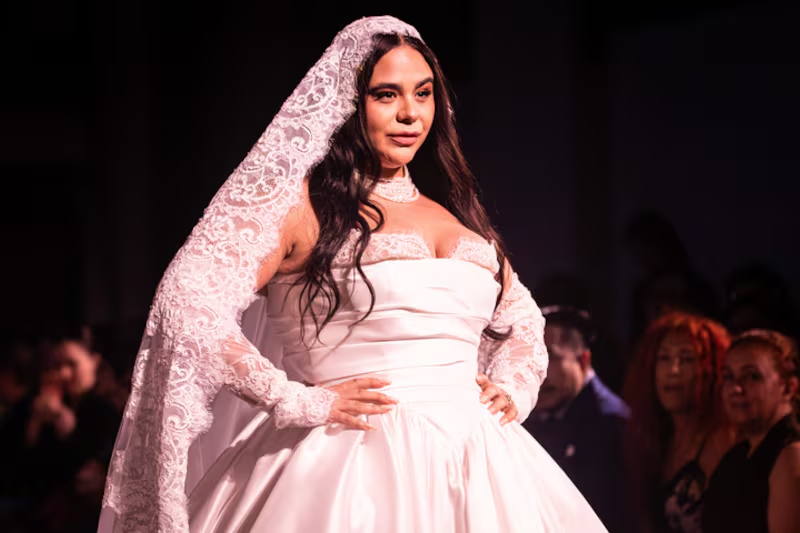
For example, Johana Hernandez’s GLAUDI bridal collection reinterpreted the white dress with her unique Latina heritage. Throughout her show, her beaded ball gowns gave way to satin jumpsuits and lace blindfolds. The introduction of many men’s silhouettes, but also risqué straight accessories, pure juxtaposes, classic women are expected to support once married. The result is women’s criticism of what a woman can and cannot be in a holy marriage.
What was even more surprising was when Hernandez knew that he wanted his runway to represent women of all colors and sizes, so much so that his show had to close with Mexican-Cuban actress Jessica Marie Garcia walking the runway. Garcia said that even though he had never walked on the show, Hernandez approached him directly to fulfill the collection.
“It doesn’t matter what size you are,” Garcia said in an interview after the show. “You can do it. You can shut down LA Fashion Week.”
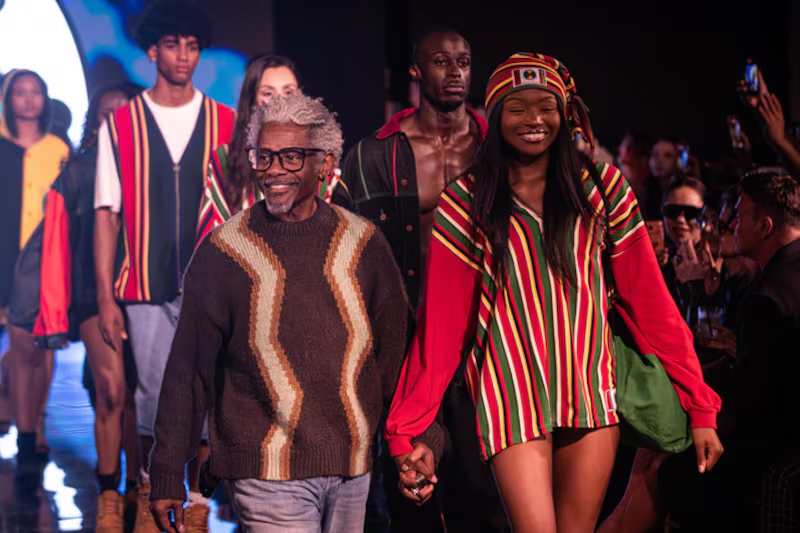
Some of the highlights were the deliberate props in a distinctly Angeleno style. The use of “Cross Colors” of skateboards instead of bags gives a more authentic LA street style than any other type of streetwear. The Black Design Collective (BDC) – a group of fashion designers of color dedicated to empowering the next generation of Black people – has also created a newsprint vest with a blue lily blooming on it. The vest may be similar to the clothes worn by elderly people from other countries, as well as the flower of the native Asians, and it also shows the diverse community of LA.
For me though, this Fashion Week was immortalized by BDC’s denim-on-denim look, with a chain stripped across the model’s chest paired with black striped pants like a prison uniform. I still remember being silent when I saw the words “Shatter ICE” written on the cloths when this model was turned away.
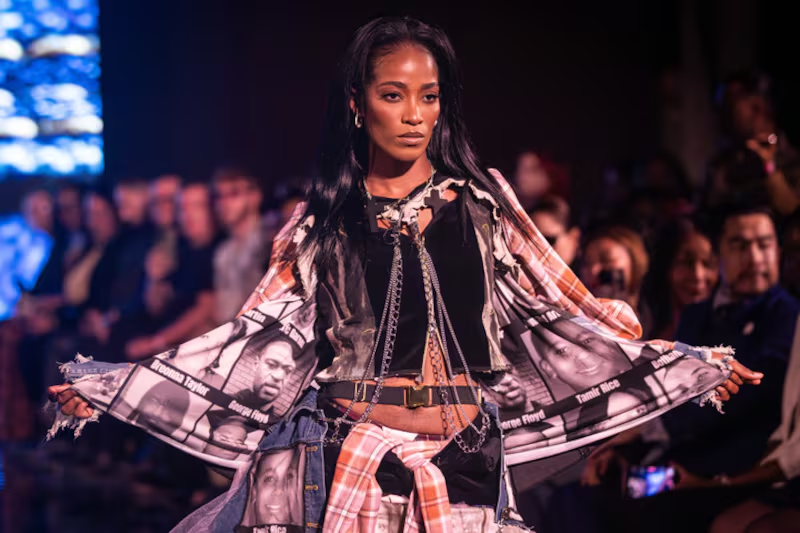
As if one statement wasn’t enough, BDC followed with a patchwork dress of various plaids, denim and images of black victims of injustice. This outfit was met with mixed silence, a few claps, and extreme admiration, as if it was too difficult to break at the same time. Mmotlele walked down the street with his fist raised, reframing the punk look through a modern political lens.
The use of clothes as clear placards, even uncomfortable ones can predict the future of Angeleno fashion that will be unashamedly democratic, and it may be what the city needs. If we hope to keep this city as a center of American-made fashion, we cannot avoid art that can criticize and inform against political mistakes.
It looks like fashion criticism, if I’ve learned anything from the LA runways, it’s to define your culture – where you grew up, what you eat, what you play, what bad things you’ve seen, what places you’ve conquered. In a time when people have to hide their ethnic roots to pretend to be “American,” revolution means wearing your right to freedom on your sleeve in the clothes you want.
Dressing up the revolution may be true, as BDC’s overtly political statement, but this is not always everyone’s choice. For others, it can be simply wearing traditional pieces along with your everyday attire. For me, it would mean wearing my khaki suit with a butterfly sleeve bolero, similar to the Filipino culture. To my friends in the Kung Fu club, it means proudly sporting silk dragons and embroidered flowers.
2026 seems to be the return of loud and proud fashion. This year it will not be only about fashion, but a deliberate, personal way of expressing yourself. Expression is something we can’t afford to lose, even if it feels like art is too small to change an entire city.
#Los #Angeles #fashion #trend #year #politics